Saturday, August 23, 2008

A State Without a Budget: Day 55 - DEMOCRATS IN CALIFORNIA ASSEMBLY TO TAKE 3-DAY VACATION DESPITE BUDGET IMPASSE

Their time away from the Capitol coincides with the Democratic National Convention, but one official says that has nothing to do with their decision not to hold sessions.

By Michael Rothfeld and Nancy Vogel, Los Angeles Times Staff Writers

August 23, 2008  - SACRAMENTO -- With the end of the legislative session approaching, no budget in place and a $15.2-billion deficit hanging over their heads, the Assembly's Democrats on Friday unveiled their plans for the next week: a three-day vacation from the Capitol.

Their scheduled time away coincides with the Democratic National Convention in Denver, where 31 members of the Legislature are expected as delegates. But that has nothing to do with the decision not to hold sessions Tuesday through Thursday, a spokesman said.

"If we had work to do, we'd be here," said Steven Maviglio, a spokesman for Assembly Speaker Karen Bass (D-Los Angeles). "It's literally silly for some of them to sit around in Sacramento."

Maviglio said the Assembly finished this week voting on most of the legislation sent over by the Senate, and new bills have not arrived. And it's legislative leaders, not the rank and file, who are negotiating the budget, he said.

Barbara O'Connor, director of the Institute for the Study of Politics and Media at Cal State Sacramento, said lawmakers shouldn't go anywhere until they pass a budget.

"It's poor judgment on their part and only fuels the fire of the public's animus toward the Legislature," she said. "It looks immature and childish."

In the state Senate, half a dozen members said Friday that they had canceled their convention plans. Senate President Pro Tem Don Perata (D-Oakland), who had intended to go, told his members to stay in town.

It is unclear how many of the Assembly members will attend the convention. Sandré Swanson (D-Alameda), a delegate, said Friday that he could not attend "in good conscience." Bass, also a delegate, canceled her plans. But she has not forbidden anyone to go.

"I don't know who is going to the convention from my caucus," Bass said. "What I do know is that our No. 1 priority is to settle the budget . . . and none of us would sacrifice that to go to a convention."

Even though many will not be in Sacramento, Assembly members will still get paid more than $1,000 in tax-free living expenses for the next six days because they scheduled a Monday afternoon meeting on water bond legislation and other matters, Maviglio said. Under Assembly rules, they can collect their allowance as long as they don't go four days without a meeting.

Democrats in California Assembly to take 3-day vacation despite budget impasse - Los Angeles Times

A State Without a Budget: Day 54 - CALIF. LAWMAKERS OPT NOT TO MEET DURING CONVENTION

By JULIET WILLIAMS, Associated Press Writer from San Francisco Chronicle

Friday, August 22, 2008 - 16:30 PDT Sacramento, CA (AP) -- Lawmakers in the state Assembly have opted not to meet for most of next week, despite a state budget that's nearly two months late and a looming deadline for hundreds of bills to pass out of both houses.

The decision makes it possible for members of the mostly Democratic body to attend the party's national convention in Denver.

Many said they still won't attend the four-day convention, which runs Monday through Thursday.

"I don't think I should festoon myself with buttons and signs and spend a week in Denver," said Jared Huffman, D-San Rafael, who is a member of the convention's platform committee.

The state Senate said it would meet every day next week.

Speaker Karen Bass, D-Los Angeles, scheduled Assembly sessions for Monday afternoon and next Friday morning, but denied she was shutting down the Assembly Tuesday through Thursday so lawmakers could attend the convention.

"I don't know who is going to the convention from my caucus. What I do know is that our Number 1 priority is to solve the budget," Bass said.

Her spokesman, Steve Maviglio, said Bass had canceled her scheduled events in Denver and her plane tickets and had no plans "at this point" to attend. Bass was scheduled to attend several events at the convention, including one with U.S. Sens. Barbara Boxer and Dianne Feinstein.

Maviglio said there's no need for the Assembly to meet every day next week because many of the bills the Assembly has to act on are still in the Senate, and with the budget unresolved, members have little to vote on.

The Legislature is supposed to wrap up its 2008 session by Aug. 31, although some bills, including the budget, can be acted on after that date.

Many Democratic legislators are delegates to the convention who would vote on the party's nomination of Illinois Sen. Barack Obama as its presidential candidate.

Still, "I can't justify going when we don't have a budget," said Assemblywoman Patty Berg, D-Eureka.

Legislative leaders have been deadlocked for weeks over how to solve California's $15.2 billion budget deficit for the fiscal year that started July 1. Democrats and Gov. Arnold Schwarzenegger have proposed several combinations of cuts and tax increases, but Republicans are staunchly opposed to higher taxes and have not offered an alternative.

Schwarzenegger has urged lawmakers to stay in Sacramento until a budget deal is worked out and has left his own appearance at the Republican National Convention the following week in St. Paul, Minn. in doubt.

"Given the fact that the Legislature is over two months past their constitutional deadline and our state faces a looming cash crisis, most Californians will probably be disappointed to hear that the Assembly has chosen not to hold session for most of next week," Schwarzenegger spokesman Matt David said.

Senate President Pro Tem Don Perata said he turned in his convention credentials last week and expects his entire caucus to be in the Senate chamber at 11 a.m. Monday and to remain in Sacramento the rest of the week.

"I can't imagine anyone going. So if anybody goes there and they're not here, then I think all hell will rain down upon them," he said. "We ought to be here, and the public ought to be outraged if we're anywhere but here."

Perata said he was more upset about the overdue state budget than missing his party's biggest party.

Freshman Democratic Assemblyman Mike Davis of Los Angeles said he would go to Denver as long as a budget vote wasn't scheduled next week.

Other Assembly lawmakers remained on the fence, though, noting that only legislative leaders negotiate the budget, not rank-and-file members.

Assemblywoman Fiona Ma, D-San Francisco, said she was still undecided, but added, "If we don't have official work that we're supposed to be here doing here, part of our job as Democrats is to help elect our next president."

Former Assembly Speaker Fabian Nunez, whose is termed out in November, was rethinking his comments from earlier in the week when he said he would go to Denver regardless of the Legislature's schedule.

"I was gung-ho about going to the convention, but I'm going to take it one day at a time," said Nunez, D-Los Angeles. "I've got to think about what I should do, how it might look for me to be partying at the Democratic Convention when we're without a budget."

___

Associated Press Writers Judy Lin, Don Thompson and Samantha Young also contributed to this report.

Calif. lawmakers opt not to meet during convention

CALIF. LAWMAKERS OPT NOT TO MEET DURING CONVENTION

By JULIET WILLIAMS, Associated Press Writer from San Francisco Chronicle

Friday, August 22, 2008 - 16:30 PDT Sacramento, CA (AP) -- Lawmakers in the state Assembly have opted not to meet for most of next week, despite a state budget that's nearly two months late and a looming deadline for hundreds of bills to pass out of both houses.

The decision makes it possible for members of the mostly Democratic body to attend the party's national convention in Denver.

Many said they still won't attend the four-day convention, which runs Monday through Thursday.

"I don't think I should festoon myself with buttons and signs and spend a week in Denver," said Jared Huffman, D-San Rafael, who is a member of the convention's platform committee.

The state Senate said it would meet every day next week.

Speaker Karen Bass, D-Los Angeles, scheduled Assembly sessions for Monday afternoon and next Friday morning, but denied she was shutting down the Assembly Tuesday through Thursday so lawmakers could attend the convention.

"I don't know who is going to the convention from my caucus. What I do know is that our Number 1 priority is to solve the budget," Bass said.

Her spokesman, Steve Maviglio, said Bass had canceled her scheduled events in Denver and her plane tickets and had no plans "at this point" to attend. Bass was scheduled to attend several events at the convention, including one with U.S. Sens. Barbara Boxer and Dianne Feinstein.

Maviglio said there's no need for the Assembly to meet every day next week because many of the bills the Assembly has to act on are still in the Senate, and with the budget unresolved, members have little to vote on.

The Legislature is supposed to wrap up its 2008 session by Aug. 31, although some bills, including the budget, can be acted on after that date.

Many Democratic legislators are delegates to the convention who would vote on the party's nomination of Illinois Sen. Barack Obama as its presidential candidate.

Still, "I can't justify going when we don't have a budget," said Assemblywoman Patty Berg, D-Eureka.

Legislative leaders have been deadlocked for weeks over how to solve California's $15.2 billion budget deficit for the fiscal year that started July 1. Democrats and Gov. Arnold Schwarzenegger have proposed several combinations of cuts and tax increases, but Republicans are staunchly opposed to higher taxes and have not offered an alternative.

Schwarzenegger has urged lawmakers to stay in Sacramento until a budget deal is worked out and has left his own appearance at the Republican National Convention the following week in St. Paul, Minn. in doubt.

"Given the fact that the Legislature is over two months past their constitutional deadline and our state faces a looming cash crisis, most Californians will probably be disappointed to hear that the Assembly has chosen not to hold session for most of next week," Schwarzenegger spokesman Matt David said.

Senate President Pro Tem Don Perata said he turned in his convention credentials last week and expects his entire caucus to be in the Senate chamber at 11 a.m. Monday and to remain in Sacramento the rest of the week.

"I can't imagine anyone going. So if anybody goes there and they're not here, then I think all hell will rain down upon them," he said. "We ought to be here, and the public ought to be outraged if we're anywhere but here."

Perata said he was more upset about the overdue state budget than missing his party's biggest party.

Freshman Democratic Assemblyman Mike Davis of Los Angeles said he would go to Denver as long as a budget vote wasn't scheduled next week.

Other Assembly lawmakers remained on the fence, though, noting that only legislative leaders negotiate the budget, not rank-and-file members.

Assemblywoman Fiona Ma, D-San Francisco, said she was still undecided, but added, "If we don't have official work that we're supposed to be here doing here, part of our job as Democrats is to help elect our next president."

Former Assembly Speaker Fabian Nunez, whose is termed out in November, was rethinking his comments from earlier in the week when he said he would go to Denver regardless of the Legislature's schedule.

"I was gung-ho about going to the convention, but I'm going to take it one day at a time," said Nunez, D-Los Angeles. "I've got to think about what I should do, how it might look for me to be partying at the Democratic Convention when we're without a budget."

___

Associated Press Writers Judy Lin, Don Thompson and Samantha Young also contributed to this report.

Calif. lawmakers opt not to meet during convention

Friday, August 22, 2008

A State Without a Budget: Day 53 and counting - WHAT HAPPENS NOW?

Despite the requests from the Governor to stay at their desks and not go to their respective conventions - and assurances from the legislators that they would stay on the job ...and rumors that they would work through the weekend - none of the above seems destined to happen.  Marty D. Omoto, Director/Organizer of the California Disability Community Action Network reports Friday evening on the California Progress Report that No California budget deal appears cose but both houses will  meet on Monday.

Assembly Will Finish Up Work On Bills Aug 31

Assembly Will Meet Monday and Then No Session Until Friday

    The Assembly - with over 30 Democratic members scheduled to attend next week's Democratic National Convention - will convene on Monday (August 25) at 1 PM, but will not meet again until Friday, August 31 at 9:30 AM. That will allow State Senate and Assembly Democrats time to attend the Democratic Convention. The Republican National Convention is scheduled the following week.

Senate Schedule Not Certain

The State Senate is scheduled to convene on Monday (August 25) but has not scheduled sessions beyond that yet.

NEXT STEPS

* LEGISLATURE: Both State Senate and Assembly will meet on Monday with floor sessions to take final actions on bills. Assembly will then not meet again until Friday, August 31 to finish its work on bills for the 2008 legislative session. The Senate has not released its schedule beyond Monday yet. Those session dates could change if a budget deal is reached - but at this point, no agreement is even close and a vote on the budget doesn't appear to be likely any time soon.

* GOVERNOR: Bills passed by the Legislature are not being sent to the Governor, but are being held temporarily because of his threat to veto all bills sent to him until a budget is passed. The State Constitution give the Governor until September 30th to sign or veto bills (or allow bills to become law without his signature), so the Legislature could hold bills that it passed until close to that date in theory. This has never happened before however.

Omoto: With California now 53 days without a State budget, the State Senate and Assembly will convene on Monday (August 25) to continue finishing up work on regular legislation. Currently, the deadline to pass bills for the 2008 Legislative session is August 31.

Both houses have adjourned for the day (Posted on Friday, August 22, 2008 ) and will not return until Monday. Leadership in both houses could call members back into floor sessions over the weekend if a budget deal is reached - though that is not likely to happen with Legislative Republicans and Democrats still far apart on any budget deal.

Earlier both houses had hoped to finish up work today and perhaps even recess the legislative session, but that hope vanished as the stand-off on the State budget grew worse.

Impact of Budget Delay On People With Disabilities, Mental Health Needs & Seniors

The impact of budget cuts - both proposed and enacted, and the delay in the budget itself has major impact on hundreds of thousands of children and adults with disabilities (including developmental), mental health needs, seniors, low income workers and families, community organizations who provide services and supports because the State has cut off payments until a budget is in place.

The impact varies depending - some services have received funding through a special trust fund, but even that fund now has been exhausted. Community organizations - especially the middle sized and small ones across California are facing serious crisis in meeting payroll and paying other costs without receiving State reimbursements or knowing when it can receive those funds.

Governor Arnold Schwarzenegger released a proposed budget compromise - referred to as the "August Revision" this week that includes $2 billion more in proposed spending cuts and also a temporary 3 year 1 cent increase in the State sales tax and budget reforms. But his budget compromise proposal was greeted with opposition by Legislative Republicans who strongly oppose any tax increases and by Legislative Democrats who oppose more spending cuts, especially to education, and have reservations about a sales tax increase as opposed to increase income taxes.


CPR: No California Budget Deal Appears Close—Both Houses to Meet on Monday

A State Without a Budget: Day 53 GOVERNOR MAY SEEK SPECIAL ELECTION FOR BUDGET

Gov. Arnold Schwarzenegger's budget has gained no support... Gov. Arnold Schwarzenegger's budget has gained no support.  The last special election in California was in 2005 and cost the state about $50 million; California voters rejected all eight ballot propositions.

Matthew Yi, San Francisco Chronicle Sacramento Bureau

 Friday, August 22, 2008 - 4:00 AM -- Sacramento -- Gov. Arnold Schwarzenegger said Thursday that the budget deadlock could last for several more weeks, a delay that would force him to call a special election.

Two significant pieces of his budget require voter approval, and many state lawmakers consider Sunday to be the drop-dead deadline for placing new measures on the ballot for the November election.

A budget deal after Sunday would mean the governor would have to put his budget measures - calling for budget overhauls and for borrowing against future lottery sales - to voters in a special election later this year or next year.

"We can have a special election. ... I prefer to put it on this ballot, but you always have to go for the next best thing. You can't always have it exactly your way," he said Thursday.

The last special election in California was in 2005 and cost the state about $50 million, according to Kate Folmar, a spokeswoman for Secretary of State Debra Bowen.

California faces a $17.2 billion spending gap, which includes $2 billion in reserves. The governor and legislators have been unable to reach a compromise on the budget for the current fiscal year, which began July 1.

It could be weeks before a deal is reached, the governor said.

With his term ending in 2010, this November election would be his last chance to take measures that he supports - structural changes in state budgeting, water and high-speed rail bonds - to the ballot box unless there is a special election.

Schwarzenegger's statements drew mixed responses from legislative leaders Thursday.

"I'm optimistic that we will pass a budget in time for this election," Senate President Pro Tem Don Perata, D-Oakland, said in a written statement.

But Eileen Ricker, a spokeswoman for Senate Republican leader Dave Cogdill from Modesto, said the senator is "willing to stay as long as it takes to get the right, responsible kind of budget for California."

The latest round of talks between Schwarzenegger and legislative leaders fell apart Tuesday when Assembly Republican leader Mike Villines, R-Clovis (Fresno County), stormed out of the meeting over talk of increasing taxes.

But budget negotiations are especially tough this year because Schwarzenegger wants structural changes, the governor said.

"I think we all could very quickly be on the same page if I would want to fix the budget problem only for this year and kick the problem down to next year. But is that what I want? No," he said, reiterating his stance that he doesn't want to borrow money to help fill the deficit.

"Republicans (in the Legislature) have no interest in thinking long-term," the GOP governor said.

Schwarzenegger made public on Wednesday his latest budget proposal, which he calls a compromise. The plan includes a temporary increase in the state sales tax by 1 cent per dollar, additional cuts and limits on spending that would allow the state to sock away additional revenue during economic boom years. He also proposes giving the governor authority to make midyear cuts during hard economic times.

Those plans, which the governor had revealed to legislative leaders during a private meeting Aug. 3, so far have failed to win endorsements from lawmakers.

Schwarzenegger said while he doesn't like raising taxes, he is willing to compromise for a budget overhaul.

"Here's a chance to go to the Democrats and say, 'Look, you've never been for budget reform. Why don't you give us budget reform and in exchange we do a temporary sales tax increase?' It could work," he said.

But Republicans maintain they won't support any taxes. Plus, GOP lawmakers also have complained the governor's proposal doesn't include a spending cap.

Schwarzenegger said the problem with trying to institute a spending cap is that even if Democratic lawmakers support it, he is convinced there is little chance it will get voter approval, recalling his attempts in the 2005 special election when his measures were soundly defeated at the ballot box. At that time, the governor had sought to change the way legislative district lines are drawn and to impose budget reforms with a spending cap.

He said he is frustrated not only by a lack of compromise in budget talks, but also with its effect on bigger projects that the state needs to take on such as improving water infrastructure and building a statewide bullet-train system.

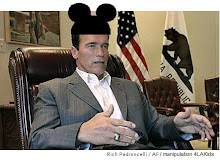
"When you travel around the world, you see the rest of the world building, building and building, and cranes everywhere. I want to see that in California, rather than Mickey Mousing around with all this nonsense and arguing about the budget," he said. "We can have a budget system in place so that we don't have to argue about the budget all the time. ... Then debate about the big things."

Governor may seek special election for budget

Thursday, August 21, 2008

A State Without a Budget: Day 52 STATE SUPERINTENDENT TO LEGISLATORS: "OPPOSE ANY FURTHER COMPROMISE TO THE 'BUDGET COMPROMISE'".

image

A similar letter was sent to all state senators.

A State Without a Budget: Day 52 CALIFORNIA GOVERNMENT HAS FAILED US

Op-Ed by Jim Wunderman in the San Francisco Chronicle

Thursday, August 21, 2008 - California's government suffers from drastic dysfunction - our prisons overflow, our water system teeters on collapse, our once proud schools are criminally poor, our financing system is bankrupt, our democracy produces ideologically extreme legislators who can pass neither budget nor reforms, and we have no recourse in the system to right these wrongs. Drastic times call for drastic measures.

It is our duty to declare that our California government is not only broken, it has become destructive to our future. Therefore, are we not obligated to nullify our government and institute a new one?

Those were the rights and responsibilities that Thomas Jefferson wrote of in the Declaration of Independence, stating that governments derive their power from the consent of the governed and that whenever a government becomes destructive to the governed, it is a people's solemn right and duty to alter or abolish it.

Our state's founders gave us the tool to take this step - with a constitutional convention. We can either be led to a convention by our elected leaders in the Legislature, who, as fed up as we are, can authorize a convention with a two-thirds vote, or we can bypass any gridlock in Sacramento with a "citizen's constitutional convention." Changes from either would go on the ballot for a majority vote.

As rash as an act as this might seem, this is not unchartered territory. Nearly 30 years after the state was founded, California received a new government from a constitutional convention. We also had a California Constitutional Revision Commission from 1964-1976 and the voters approved and codified the commission's revisions in separate pieces in 1966, 1970, 1972 and 1974. Jefferson also cautioned that governments should not be changed for light and transient causes. So let us consider the seriousness of the ills and their relationship to the Constitution. California is the only state that has not passed a budget this year. While the budget battle rages, no other legislative matter gets real attention, despite an armada of problems requiring state attention - water, education, roads, prisons, health care, housing, economic policies and more. If this were a rare occurrence, then we could look the other way, but it has happened 18 of the past 22 years! The chief reason is that only Rhode Island, Arkansas and California have a constitutional requirement of two-thirds legislative budget approval, which in California is nearly impossible. Republicans contend this threshold is their only check on Democrats' profligate spending, but if Democrats do overreach, more Republicans would be elected. Likewise, some states pass two-year budgets, freeing at least one year for pure legislative work, but California's Constitution prevents such sensible practice.

California's primary system and gerrymandered Assembly and Senate districts, both parts of the Constitution, consistently produce candidates from the ideological extremes. In such an atmosphere, party orthodoxy rules all, and crossing the line to compromise is political suicide. For this reason, real, desperately needed change is blocked at every turn, and only bills like regulating tanning booths actually escape alive.

California's system of taxation and spending is almost entirely hardwired into the Constitution. It produces wildly fluctuating revenue booms and busts that put state services on a cruel feast-or-famine roller coaster that drags the poor, the elderly, children and even the business community along for the painful ride. Similarly, local funding is hogtied to the state's, forcing our cities and counties to suffer as well from outdated laws in the Constitution. California's bureaucratic red tape is legendary, reflecting nothing of our 21st century economy, culture and society.

That is because so many state agencies, boards and commissions have been placed forever in our Constitution. Texas actually has a Sunset Commission in which nearly all of its 150 agencies are automatically abolished after 12 years, unless legislation is enacted to continue them. Alas, our state Constitution prevents this, too. California's Constitution was always meant to be a living document that could adjust to the times. The time has come to make serious adjustments. As Jefferson would remind us, this is not just a right, it is a patriot's solemn duty.

Jim Wunderman is the president and CEO of the Bay Area Council.

A State Without A Budget: Day 52: CALL SCHWARZENEGGER'S BLUFF - LET DEADLINE FOR BALLOT MEASURES PASS


by Casey Mills, Beyond  Chron/San Francsisco  --

2008-08-21Earlier this month, Governor Schwarzenegger vowed he wouldn’t sign any legislation before a budget was passed, an obvious attempt to blackmail Democrats into hurrying along the process and accepting a Republican-driven result. Since then, mainstream coverage of the budget battle consistently includes hand-wringing over the looming deadline – this Saturday – for placing or altering measures on November’s ballot. This sort of coverage goes on to cite all the ‘major’ initiatives that wouldn’t go before voters due to the current logjam. Yet of the four big initiatives that must meet Saturday’s deadline to move forward, none are essential to a progressive Democratic agenda, and all were initiated at least in part by Schwarzenegger himself. State legislators should let the deadline pass … and let the Governor eat crow.

There’s no doubt that vital legislation remains trapped due to the Governor’s freeze on signing bills. A variety of important health care initiatives, for example, would benefit immediately from the budget passing. Landmark bills involving farm worker protections and electoral reform are also winding their way through the process, and deserve immediate attention by the Executive once they’re ready.

However, when it comes to items that must be approved by Saturday in order to go before voters, the ‘Big Four’ shouldn’t make progressives lose any sleep. They include:

Water: The Governor and Senator Dianne Feinstein want voters to okay a $9.3 billion water bond, which would go towards a slew of major infrastructure improvements. For starters, the bill remains woefully inadequate in terms of utilizing simple, cheap and effective strategies like water conservation, efficiency and recycling, which has earned it the ire of many major environmental groups. But even more important, Democrats have not had ample time to develop a counter proposal. There’s no question California faces severe challenges concerning its water supply, but at this point waiting a year for a good proposal is far preferable to rushing a bad one.

Lottery: Back in May, the Governor proposed borrowing $15 billion from state lottery income over the next three years. While Democrats continue to seek legitimate and progressive sources of new revenue to ensure a sustainable budget, Schwarzenegger continues to push this one-time fix with dubious certainty of success. Assembly Speaker Karen Bass hit the nail on the head when she called it “a Rubik's Cube budget, not a long-term, structurally balanced budget.”

Not only that, but it would give more flexibility to the state lottery to grow its operation. This would come in the face of a recent California Budget Project report citing studies that show “individuals with lower incomes spend more on lottery tickets per capita than those with higher incomes,” and that “lottery sales are higher for individuals who have little or no formal education, are residents of urban areas, are between the ages of 45 and 65, and are not white.” Essentially, it’s a proposal to borrow our future on the backs of those least able to afford it.

Spending Cap: Creating a state spending cap has been a state Republican priority for years, and while it’s sold as a fiscally responsible move to the average voter, it’s a thinly guised attempt to annihilate public services. While some Democrats have toyed with the idea of agreeing to a cap in order to satisfy state Republicans and pass a budget, progressives have rightly stood firm against the idea, and should continue to do so.

High Speed Rail: Of the four, changes to the high-speed rail measure represent the only thing that might be an unfortunate casualty. The initiative would allow development of the rail line along its entire proposed route, rather than just between San Francisco and Los Angeles. It would also create more oversight to ensure the bonds get spent efficiently.

However, the measure continues to poll above 60 percent as it is, and changes to it could cause confusion on the ballot by creating a ‘Prop 1A,’ or even a new ‘Prop 12,’ instead of a the existing and simple ‘Prop 1.’ In addition, building the first leg of the route first could generate immediate public support for high speed rail, potentially making it easier to build the extensions to Sacramento and San Diego later on. Ultimately, the benefits aren’t significant enough to fight for it, particularly considering they were all Schwarzenegger’s ideas in the first place.

Given the nature of these measures, why would Democrats lift a finger to ensure they make it to the ballot? More specifically, why would they rush to pass a budget by continuing to negotiate with a Republican legislature with no intentions of compromising, simply to further a conservative agenda?

Instead, state Democrats should be working to ensure the measures don’t make it on the ballot. For starters, it robs Republicans of the ability to achieve some major policy goals. It also robs the Governor of the spotlight this election season should his water bond and budget-related proposals make it on the ballot.

Even better, it lays the responsibility for the measures failing to make it to the ballot directly on the Governor’s doorstep. It was him and him alone that dreamed up the ban on not signing legislation until a budget is passed. That he didn’t stop to think that the first casualties might be his pet projects is no one’s fault but his own. Even worse for Schwarzenegger, it’s becoming increasingly clear that it’s not the Democrats holding up the budget process, but blindly anti-tax members of his own party – politicians who continue to refuse to even offer a budget proposal of their own.

There’s no question Republicans will try and blame ‘obstructionist Democrats’ from preventing these measures from reaching voters. But the fact will remain that the entire debacle represents some serious egg on the Governor’s face. Rather than letting the deadline come and go quietly, Democrats should be relentless in pointing this out.

He made his bed – now it’s time to lay in it.

A State Without a Budget: Day 52 CALIFORNIA'S BUDGET BILLIONS

No matter what budget Sacramento comes up with, California voters will probably increase the deficit in 10 weeks.

By Mark Paul   Op-Ed in the LA Times

August 21, 2008 -- There's little chance that the state budget eventually passed in Sacramento will actually rid California of its stubborn $15.2-billion deficit. But in the improbable event that the Legislature and governor balance the budget without resorting to such gimmicks as raiding other accounts, enjoy the moment. In just 10 weeks, California voters will likely throw it out of whack again.

California has two budgets. One is passed by lawmakers. The other is improvised at the ballot box. The state's Constitution requires that the budget put together in Sacramento at least pretend to be balanced. The spending that voters enact operates under no such discipline. We do what we please.

And what usually pleases us is to add billions in spending obligations without providing any revenue to pay for them. Over the last decade, voters have passed bonds and programs, as well as shifted general tax revenue to transportation, that will cost the general fund -- when all the bonds are sold -- about $9.5 billion in debt service and spending a year, according to estimates by the Legislative Analyst's Office. That's equivalent to 9% of the current general fund,or about the total cost of all of today's state social service programs.

On Nov. 4, we will have numerous opportunities to spend even more. The ballot will include Proposition 1, a measure put on the ballot by the Legislature, which authorizes $9.95 billion in general obligation bonds to build a high-speed rail system between Los Angeles and San Francisco. Money from two other bond measures, qualified for the ballot by their intended beneficiaries, would build/renovate children's hospitals (Proposition 3) and subsidize alternative-fuel cars and electricity generated from renewable sources (Proposition 10). Big water interests are pushing lawmakers, in budget negotiations, to add a huge waterworks bond to the menu.

Voters also will decide three crime measures with fiscal consequences. Proposition 5 calls for more spending for drug treatment in prison. Proposition 6, an anti-gang measure, would increase state spending for a variety of criminal justice programs and lengthen sentences for some crimes. Proposition 9 would prevent the state from saving money by releasing prisoners before their sentences are up to reduce prison overcrowding.

Leave aside whether these measures are worthy as policy. Just look at the dollars involved. If voters pass all six, we will cumulatively add about $2.7 billion a year in bond debt service and direct state spending to the budget -- without including an extra dime to pay for them. That amount would grow to more than $3 billion if the water bond lands on the ballot and is approved. The sum is about what the state annually spends on the University of California, and it would be plopped into a budget already badly out of kilter because of a big spending/revenue imbalance.

California's spending addiction at the ballot box is thoroughly bipartisan. State Sen. George Runner of Lancaster, who chairs the Senate Republican Caucus and beats the drums against "the bloated budget," is the sponsor of Proposition 6, which would cost taxpayers about $600 million a year, according to the Legislative Analyst's Office. Proposition 5, funded by liberal drug-policy reformers George Soros and John Sperling, would annually spend about $1 billion to expand drug treatment programs for criminals and rehabilitation for parolees, in the hope of eventually reducing the inmate population and the need to build more prisons.

In a little-noticed report, Treasurer Bill Lockyer projected last year that, at current tax levels, California will not be able to pay for its existing programs and its debt service at any time in the next two decades if voters keep approving bonds at the same rate as they have over the last 20 years. Every ballot proposal that comes without a funding source adds to the problem. But that hasn't stopped people from putting spending measures on the ballot and voters from passing them. Fiscal discipline -- that's the Legislature's job, isn't it?

Mark Paul, senior scholar at the New America Foundation, was formerly deputy treasurer of California and deputy editorial page editor of the Sacramento Bee.

A State Without a Budget: Day 52 LEGISLATORS NOT OPTIMISTIC ON BUDGET - North Coast Democrats grim as state fiscal impasse reaches 8th week

By ROBERT DIGITALE | Santa Rosa  PRESS DEMOCRAT

Thursday, August 21, 2008 at 4:30 a.m -- The 2008 state budget impasse is now among the fifth longest in the 22-year run of busted deadlines, and North Coast legislators -- all Democrats -- generally see little likelihood of a quick resolution.

What will it take to get a budget? "A lot of prayer," said state Sen. Patty Berg, D-Eureka, whose sprawling district stretches from the Oregon border to Santa Rosa.

She offered no specifics on what compromises she'd be willing to make, saying the budget is in the hands of "the big five," leaders -- Gov. Arnold Schwarzenegger and the two party leaders in the Senate and Assembly.

"This is the worst impasse I've seen since I've been here," she said.

"State Sen. Pat Wiggins, D-Santa Rosa, was no more optimistic. "We're not much closer than we were from Day 1," she said

California is beginning its eighth week without a budget. A vote Sunday in the Democratic-controlled Assembly fell short of the required two-thirds approval and failed to receive the support of a single Republican.

The latest signing of a state budget in the past 20 years occurred on Sept. 5, 2002. Last year Schwarzenegger signed the budget on Aug. 24, the third latest in the past two decades.

The legislators acknowledged that time is running out for a budget solution that could include items requiring voter approval this November.

"We probably need to lock everyone in the room and not let anyone out," suggested Assemblyman Jared Huffman, D-San Rafael.

The Secretary of State's Office has indicated that after this week it may be too late to get a measure on the November ballot. Republican lawmakers and the governor have warned that failure to get spending restraints onto the ballot could prompt a breakdown in negotiations.

Assemblywoman Noreen Evans, D-Santa Rosa, said it is conceivable that the Legislature still could get items on the Nov. 4 ballot after this week, but the cost might become prohibitive.

She said the two sides need to find an acceptable compromise. But to her what seems clear is that Democrats resist a "hard spending cap" on future government growth while Republicans reject new taxes.

A third option would be to balance the budget by borrowing more money, but Evans said that approach is "a large part of why we're in such a budget mess now." As such, the Democrats are "staying hard and fast to the rule of no more borrowing," she said. That's a position shared by Schwarzenegger but not his fellow Republicans in the Legislature.

Huffman said he is part of the leadership team on the budget for Assembly Speaker Karen Bass, D-Los Angeles. As such, he said, he has been "urging a budget vote for some time," and he maintained that Sunday's vote was helpful in allowing Republicans to vent and "blow off some steam."

Evans will become the new chairwoman of the Assembly Budget committee in November. She said she has been working with Speaker Bass and other budget committee members and staff.

The two also said they have been speaking individually with Assembly Republicans, trying to find any middle ground and to keep the discussions going.

"In the Assembly, that's not easy because both sides have been very polarized," Evans said.

Asked about her personal efforts, Wiggins said: "I keep telling locals and groups to push the governor to lead . . . He isn't doing that, but he should."

Evans and Huffman both said they "hate" the governor's proposed temporary 1-cent sales tax increase because of its regressive nature, meaning it takes a disproportionately larger bite from the pocketbooks of the poor. Still, they conceded they might support such a tax under certain circumstances.

Evans said her support for a sales tax hike would be tied to avoiding "huge hits" in the budgets of education, health care, parks, public safety and environmental protection.

Wiggins said she opposes the sales tax increase as regressive and too unpredictable for the amount of revenue it will provide the state.

Berg said she opposes the sales tax proposal and the Republicans' spending cap. "It's not how much money we have. It's how we spend it," she said.

Staff Writer Derek Moore and the L.A. Times contributed to this report

Legislators not optimistic on budget | PressDemocrat.com | The Press Democrat | Santa Rosa, CA

Wednesday, August 20, 2008

A State Without a Budget: Day 51 SCHWARZENEGGER'S PUSH TO HIKE SALES TAX RILES GOP: The governor says a temporary increase could help close the budget gap. But his party's leaders want to borrow.


Borrowing proposals involve diverting money specifically set aside by voters for local governments, road and other transportation projects, mental health programs and early childhood education.

By Evan Halper, Los Angeles Times Staff Writer

August 20, 2008  -- SACRAMENTO -- -- Gov. Arnold Schwarzenegger has taken on an unlikely role as one of the Capitol's most steadfast champions of a tax hike, spurning his fellow Republicans' uncharacteristic effort to borrow their way out of budget trouble.

The GOP lawmakers, preferring debt to a tax increase, say Democrats might have agreed to close the $15.2-billion budget gap with loans by now if not for Schwarzenegger.

"The legislative leaders understand we will not support a tax increase," said the leader of the Assembly's Republicans, Mike Villines of Clovis, who stalked out of budget talks in anger Tuesday afternoon. "I don't think the governor understands that. . . . It is so frustrating to sit through these meetings in his office. How many times can we say no to taxes?"

In an interview with The Times on Tuesday afternoon -- 50 days into the new fiscal year -- Schwarzenegger said resistance to tax hikes had led GOP lawmakers down a reckless path. He said they wanted to balance the budget by raiding local governments and public transportation accounts for billions of dollars. That money, under state law, would have to be repaid with steep interest.

The governor, who came to Sacramento promising never to raise taxes, now wants to raise the sales tax temporarily. If Republicans agree, he said, they would get, in return, Democratic support for future spending restraints.

"I think the sweet spot is a sales tax increase," Schwarzenegger said in the interview, "with the Democrats compromising on the budget reform in such a way that we have a real spending limit here. . . . Not everyone sees it that way. That's what I see."

Republicans say the governor's proposed spending controls, which would force lawmakers to put more money into a reserve, are inadequate. They want to prohibit state spending from growing faster than the population and inflation.

One of the governor's first big moves in office was cobbling together a plan to bail the state out of its last budget crisis, with more than $10 billion in borrowing. Despite pledges never to take that path again, the governor agreed this year to borrow $3 billion more. Now, he says, he is closing that door.

"We still haven't paid off the money we borrowed in 2003," Schwarzenegger said. "How can you go and borrow more? It is irresponsible."

Villines said that although GOP lawmakers' refusal to raise taxes may force the state to fall back on borrowing, the Democrats who control the Legislature are actually calling the shots, as the loans would pay for programs that they insist should not be cut.

Democrats, however, say the solution is more taxes.

Villines said the governor's continued support of that view had set negotiations back weeks.

"The approach he is taking is wrong on this one," Villines said, suggesting that talks among legislative leaders would be more productive if Schwarzenegger weren't in the room. "We would have been much better served having our own meeting and getting some work done."

The governor and legislative leaders refused to share details of the borrowing proposals being debated in confidential negotiations. But a memo obtained by The Times that was drafted by local government and transportation lobbyists close to the negotiations spells out what is on the table.

It involves diverting money specifically set aside by voters for local governments, road and other transportation projects, mental health programs and early childhood education. All of it would have to be repaid. Schwarzenegger, while refusing to discuss details, said the plan would leave the state with a $9-billion shortfall next year.

"What we need to do is just fix the problems and recognize we are short on revenues and deal with the issue right now," he said. "I don't know why we would wait."

Following Tuesday's rancorous meeting, Democratic leaders slipped out a back door, avoiding reporters. The governor stepped out of his office to hold a rare impromptu news conference.

He called on lawmakers not to leave town until a budget is passed, a comment that appeared aimed at Democrats who may be itching to attend their party's national convention in Denver next week. Assembly Speaker Karen Bass (D-Los Angeles), who is scheduled to host a fundraiser for the California Democratic Party at the convention, said she would cancel her plans in the absence of a budget.

Senate Leader Don Perata (D-Oakland) has said he told his caucus to plan on being in Sacramento next week.

As lawmakers bickered with one another and the governor, a federal judge issued a ruling that added significantly to their problems. U.S. District Judge Christina A. Snyder ordered the state to reverse a budget cut approved by lawmakers this year to the Medi-Cal health insurance program for the poor.

The ruling, which restores a 10% reduction in Medi-Cal reimbursement rates for doctors and other healthcare providers, will cost the state $575 million this fiscal year.

The ruling is temporary, pending the final outcome of a lawsuit filed against the state by healthcare providers, but Snyder determined that the lawsuit would probably succeed.

Snyder said the cut was probably illegal because lawmakers failed to consider factors required by the federal program, including providers' costs and whether enough doctors would be willing to accept Med-Cal patients.

Ned Wigglesworth, a spokesman for the California Medical Assn., which represents doctors, said the cuts exacerbated problems caused by the state's already low Medi-Cal reimbursement rates, which "forced many healthcare providers who were trying to hang on in the program out of the program."

Snyder did not reverse cuts for managed care programs and some hospitals, saying there was no proof that their care would be compromised.

Lisa Page, a spokeswoman for Schwarzenegger, said Tuesday that the administration was reviewing Tuesday's ruling and determining next steps.


Times staff writers Michael Rothfeld and Nancy Vogel contributed to this report.


Schwarzenegger's push to hike sales tax riles GOP - Los Angeles Times

A State Without a Budget: Day 51 CALIFORNIA NATIONAL GUARD LOSING BUDGET BATTLE IN LEGISLATURE: Democrats in the state Senate block a $3.3-million allocation to give educational benefits to Guard members

California is the only state that gives no educational benefit to National Guard members.

By Nancy Vogel, Los Angeles Times Staff Writer

August 20, 2008  -- SACRAMENTO -- While they have been beating back wildfires across the state and fighting wars on two fronts overseas, the citizen soldiers of the California National Guard have also been waging a battle in the Legislature -- and losing.


For the second year in a row, state lawmakers have rebuffed the Guard's effort to win state money to help cover the cost of college for its members. State military officials say their only hope now is that Gov. Arnold Schwarzenegger will prevail upon Democratic legislators to include money for tuition assistance in the budget that is 49 days overdue and more than $15 billion in the red.

California is the only state that gives no educational benefit to National Guard members.

Schwarzenegger has called the lack of benefits "unconscionable" and proposed spending $3.3 million this year and next to help Guard members with tuition assistance. That is enough to cover most tuition and fees at community colleges or a state university for about 2,000 people.

Democrats and Republicans in the Assembly agreed. But Democrats in the Senate scuttled a bill that would have created the program and then stripped the $3.3 million from a Democratic budget plan.

Senators said the program's cost doomed it and hundreds of other spending proposals as the state wrestles with a $15.2-billion budget gap.

"Given the budget crisis, all bills that had a substantial amount of money" attached did not pass, said Sen. Jack Scott (D-Altadena).

But some senators had concerns beyond the fiscal, said Sen. Mike Machado (D-Linden), who chairs the subcommittee that oversees National Guard funding.

He said that given how the Bush administration has been using the National Guard to augment troops in Afghanistan and Iraq, the federal government -- not the state -- should pay for expanded Guard benefits.

"I think the federalization of the Guard is putting on an undue toll," Machado said, "and I think in that case, the federal government has a greater responsibility for providing incentives for recruitment and retention."

People who join the California National Army or Air Guard typically hold full-time jobs and do military training on weekends.

They act as the state's backup force in emergencies such as natural disasters and other crises.

Last month, more than 1,000 Guard members and 17 Guard helicopters helped state and local firefighters battle wildfires. California's 21,000 Guard members have also served 27,000 deployments overseas since the Sept. 11 terrorist attacks. Some members have been deployed several times.

California's Guard membership is the smallest per capita of any state and should be at least 25,000, Guard officials say.

The Legislature's reluctance to boost National Guard benefits is penny-wise but pound-foolish, they argue, because the federal government pays almost all of the state Guard's payroll, training and equipment costs.

The officials figure that an additional 8,000 members would draw a $400-million federal investment. But they say the lack of educational benefits hinders their ability to recruit and retain people.

"We're losing good-quality people to other states," said Maj. Thomas Keegan, a helicopter pilot who is also the legislative liaison for the California National Guard. "California uses its National Guard more than any other state in the nation, and does less for it than any other state."

Guard officials offered as an example Tech. Sgt. Maria Tubergen of Sacramento, who was named Non-Commissioned Officer of the Year in February by the California Air National Guard for her work with the 129th Rescue Wing at Moffett Field near San Jose.

Tubergen was honored by her supervisors for her community service, including volunteer work at an orphanage in Africa during a 2007 deployment, and for her handling of personnel issues for her squadron.

Tubergen, 26, moved to California three years ago and joined the Guard. She would like to remain in California and study to become a military flight nurse.

But she has used most of her federal GI Bill educational benefits, and staying in California does not make financial sense.

So she is applying to schools in Florida, Arizona, Washington and Michigan, because those states pay at least some college tuition for people willing to join their National Guard, which she would do.

"There are other states that will pay my full cost," Tubergen said.

In her native Michigan, she said, the Michigan Air National Guard paid more than half of her cost to earn a biology degree at Western Michigan University.

"It would be almost silly of me to take on debt," Tubergen said.


California National Guard losing budget battle in Legislature - Los Angeles Times

Tuesday, August 19, 2008

A State Without a Budget: Day 50 Schwarzenegger to Legislature: "YOU'RE GROUNDED"

 In which the Governator threatens to keep the Democrats in Sacramento for the Democratic convention ...even though it's the Republicans that are holding up the budget!    How Republican of him.

L.A. NOW BLOG | LA TIMES

4:27 PM, August 19, 2008

Tough_love_from_the_gov No state budget? Then no national political conventions for you, the Governator told state lawmakers today. Evan Halper passes along the news:

Gov. Arnold Schwarzenegger's comments came after a meeting with legislative leaders in his office that seemed to do little to move stalled budget talks forward.

"I told the legislative leaders that it is extremely important not to leave until we have a budget done," Schwarzenegger said. "We are two months past the constitutional deadline... and I think it is inexcusable not to have a budget yet."

The governor said he would not support a plan being pushed by Republicans in private talks that would replace proposed increases in taxes with borrowing from local government and transportation projects to close the state's $15.2-billion shortfall.

"We are still paying off debt that occurred from the 2003 [budget] disaster we had," the governor said. "The Republicans want to go out and borrow ... more money before we have paid off our debt. So I think that is not a good idea. The key thing here is to stay focused and come up with a compromise.

"I don’t want them to leave until the job is done. Anyone who says they do not want to compromise, I do not think they are doing a service to the state of California  and the people of California."

Maybe Schwarzenegger should borrow a page from Karen Bass' playbook and boot everyone out of the Capitol until a budget is passed.

--Veronique de Turenne

Schwarzenegger to Legislature: You're grounded | L.A. Now | Los Angeles Times

A State Without a Budget: Day 50 STATE'S DEMS SHOULD HOLD STRONG ON BUDGET

"What’s important is that Democrats should cease trying to pass a compromise budget when the people they’re negotiating with obviously have no intention of compromising. They should instead focus their efforts on convincing Californians that the reason they’re refusing to capitulate is to protect and defend the interests of the state’s residents."

by Casey Mills, BeyondChron.com - San Francisco's Alternative Daily News

GOP Assembly Leader Mike Villines and Democratic Speaker Karen Bass

Aug 19, 2008 - Sunday’s vote on the state budget, in which every single Republican in the Assembly cast a ‘no’ vote against a proposal that would have both cut spending and raised taxes to close the current $15.2 million gap, exposed a glaring fact about the budget impasse. For state Republicans, the process has ceased to represent an effort to reach a solution. Instead, it represents an opportunity to stoke California’s anti-tax sentiments and tell constituents come election years that they ‘steadfastly opposed the Democrats’ attempts to raise taxes.’ While the State Dems must hold strong in their efforts to pass a more progressive state budget, they must simultaneously develop a simple argument targeted towards everyday voters explaining their refusal to bend to Republicans’ will.

Despite California’s progressive reputation, our state possesses a long history of being rabidly opposed to taxation. Proposition 13, passed in the late 70s, tapped into this wellspring and sparked a national movement still in bloom today. State Republicans in Sacramento remain determined to keep stoking the fires of the faithful.

Reading quotes from Assembly Republicans about Sunday’s vote made me feel like I’d been transported back to the apex of American fiscal conservatism, the Reagan era. Mike Villines (R-Clovis), for example, ripped a page from the Gipper’s playbook, telling the Chronicle that “what's important now is that they [the Democrats] know we're not willing to (vote for) taxes.”

To close the state’s $15.2 billion budget gap without raising a single tax represents an impossible task. Employing solely cuts would cause catastrophic effects to state services and anger amongst constituents across party lines. And the Republicans know it. They refuse to present a tax-free alternative to the Democrats’ solution, instead focusing on pandering to their anti-tax base and painting Democrats as fiscally irresponsible.

The state’s mainstream media seems determined to add credence to this narrative. They present the battle as one between the Governor and the Democratic-controlled legislature. In reality, because of California’s policy of requiring a 2/3 majority to pass the budget, it’s the State and Assembly Republicans who hold all the power. As long as these Republicans refuse to vote for a budget proposal, negotiations will remain at a standstill.

This leaves the Democrats with two options:

First, they can continue to bend over backwards to produce compromise budget proposals, trying to convince the public that they’re still working to solve the impasse. This involves offering up more capitulations that should be anathema to a truly progressive state Democratic Party, including creating a state spending cap that would destroy a wide array of essential services. It also does nothing to reverse the Republican narrative that the entire budget debate comes down to taxation.

Or, they can hold strong and refuse – just like the Republicans – to pass any budget that doesn’t represent their vision for California.

Holding strong seems the obvious choice. The problem remains, however, that to the average voter, Democratic control of the Senate and Assembly means the budget failing to pass will be viewed as their fault. The media will do absolutely nothing to correct this fallacy. You can try to tell folks about the 2/3 majority rule until you’re blue in the face – when something doesn’t happen in Sacramento, people will continue to blame the Democrats.

So what can the state’s progressives do? Fight fire with fire.

They can come up with a slogan, a mantra, as pithy and powerful as ‘no new taxes,’ explaining why they’re refusing to pass a budget. And they can use it as their battle cry during this year’s budget fight. The opposition has turned the debate over the budget into a proxy war over taxes, and progressives must now utilize the same strategy. Instead of reacting to accusations of being fiscally irresponsible, it’s time Democrats went on the offense.

There’s a variety of slogans to choose from, as the budget battle represents a fight to save basic services that reflect the core values of many Californians. “Respect Our Children,” for example, as a spending cap would prevent the state from being able to afford baseline levels of spending on the state’s school system. “Protect Our Workers,” as a sales tax increase would hit the pocketbooks of hundreds of thousands of the state’s low-income workers hard. “Grow Our Economy,” as desperately needed funding for research and development in building new sectors in the state’s economy would disappear without increases in taxes. “Real Transportation Choices,” as without new revenue, state public transportation funding will be gutted.

The list could go on. What’s important is that Democrats should cease trying to pass a compromise budget when the people they’re negotiating with obviously have no intention of compromising. They should instead focus their efforts on convincing Californians that the reason they’re refusing to capitulate is to protect and defend the interests of the state’s residents.

While further intransigence from both sides means a budget solution won’t be reached any time soon, what have the Democrats have to lose? Yes, the state will face a cornucopia of problems should the stalemate continue. But the Democratic Party must work to convince the state that it’s the Republicans’ thoughtlessness towards children, workers, the economy and the environment that’s the cause of these problems - not the Democrats’ love of taxes.

The budget shouldn’t be about taxes. It should be about people. And it’s up to the Democrats to change the terms of the debate.

BeyondChron: San Francisco's Alternative Online Daily News

A State Without a Budget: Day 50 CALIFORNIA BUDGET IMPASSE PERSISTS AS GOP REFUSES INCOME TAX RISE

By JUSTIN SCHECK - Wall Street Journal


August 19, 2008; Page A3 - California's months-long budget standoff hit a low when an emergency State Assembly meeting failed to produce a compromise between Democrats and Republicans over how to compensate for a shortfall exceeding $15 billion.

At issue is the Democrats' proposal to make up for the deficit largely by increasing taxes on California's wealthiest residents -- a plan that Republicans oppose. In a vote Sunday, not a single Assembly Republican voted for the plan to raise $6.7 billion in revenue largely through income-tax increases. Republicans account for 32 of the assembly's 80 seats, but California requires that two-thirds of the legislature approve the budget.

"We're fundamentally saying 'no tax increases,'" said Mike Villines, the Assembly Republican leader. If the tax standoff continues, California state workers could have their pay reduced to minimum wage, and the state could be forced to take out high-interest loans to fund ongoing operations.

Similar conflicts over how to make up budget deficits in tough economic times could crop up in other states over the next year because of the housing crisis, said Kim Rueben, a fellow with the Public Policy Institute of California who studies state budgets.

Ms. Rueben said California is particularly susceptible to economic changes as it is heavily dependent on income taxes on the rich, thanks largely to limits on property-tax increases as well as a 2004 measure that imposed increased taxes on the wealthy. The Democrats' plan for more income-tax increases amounts to "exaggerating a tendency that's already one of the state's biggest tax problems," she said.

Assembly Speaker Karen Bass, a Democrat, said there is little choice because the state has already cut funding for programs and needs to find more revenue.

Both sides have been reluctant to accept Gov. Arnold Schwarzenegger's proposal for a temporary sales-tax increase.

"I'm very skeptical of any politician claiming they want a temporary tax," said Republican Assemblyman Chuck Devore. In the future, he said, legislators will argue that they have "grown accustomed to the tax and we need the revenue." Democrats said the sales tax places an undue burden on poor and middle-income residents.

Democrats say a sales tax increase would be regressive. That stance could be changing in the wake of Sunday's vote, which was preceded by a debate in which dozens of legislators aired their grievances.

Ms. Bass, in between meetings with Mr. Villines, said both parties are discussing a sales-tax increase with a built-in end date and several measures to close tax loopholes for the wealthy that won't amount to increases in the income-tax rate. For example, she said, Democrats and Republicans agree that a rule exempting out-of-state yacht purchases from state taxes could be changed.

She and Mr. Villines said they expect to reach a compromise sometime this week. The key to the latest talks, she said, was the Sunday debate. "Frankly, the catharsis was needed yesterday," Ms. Bass said on Monday.


Monday, August 18, 2008

A State Without a Budget: Day 49 ASSEMBLY DEMOCRATS BUDGET BILL FAILS + CALIF. GOP LAWMAKERS KILL DEMS $6.6B TAX PACKAGE + SACRAMENTO'S FUNDRAISING FOLLIES

• from the AP: "California is the last state in the nation on a July fiscal calendar to enact a budget. " The LA Times editorializes: "The state budget is past due, so why are lawmakers spending time raising big bucks from donors?" At a party Sunday afternoon a friend opined that "all the lawmakers, Republican and Democrat alike, should be tossed out".  4LAKids would like to second the motion.


Assembly Democrats Budget Bill Fails

BY Matthew Yi & John Wildermuth, San Francisco Chronicle Staff Writers

California Governor Arnold Schwarzenegger file photo. Fre...

Monday, August 18, 2008 04:00 PDT - Sacramento -- A revised budget proposal by Assembly Democrats failed Sunday night in the lower house of the state Legislature during an unusual weekend session that quickly morphed into nearly five hours of finger-pointing that didn't end the 48-day budget stalemate.

The 45-30 vote fell well short of the 54 "yes" votes needed to satisfy the two-thirds majority required. And the lengthy session gave no indication the Democrats would get additional Republican votes needed to pass their spending plan.

"I'm definitely disappointed," said Assembly Speaker Karen Bass, D-Baldwin Vista (Los Angeles County). "But now that everyone has aired their feelings, (today) we can get back to work."

The speaker suggested it is time for Republican Gov. Arnold Schwarzenegger to "turn up the heat" in an effort to reach a compromise.

Aaron McLear, a spokesman for Schwarzenegger, said the governor will continue to push lawmakers to pass a bipartisan budget that he can sign.

Assembly Republican leader Mike Villines from Clovis (Fresno County) said he thought Sunday night's debate would help push the negotiations forward, but added: "What's important now is that they know we're not willing to (vote for) taxes."

Democrats presented what they billed as a compromise proposal that would close the state's $15.2 billion budget gap with a combination of tax increases and spending cuts.

"Nothing in this budget is easy," said Assemblyman John Laird, D-Santa Cruz. "I believe the cuts go too far in some instances, and I'm unhappy to see the reinstatement of the higher corporate tax rate and other taxes. But no one has put together a plan to balance the budget without significant new revenues."

But Republicans, holding tough to their "no new taxes" pledge, said the plan to raise $6.7 billion in new revenue by boosting taxes on Californians with taxable income of $321,000 or higher, increasing the corporate income tax and suspending some business tax breaks was never going to pass.

The proposed budget "runs the risk of putting California on the brink of bankruptcy, along with many of its citizens and businesses," said Assemblyman Roger Niello, R-Fair Oaks (Sacramento County). "We have a $15 billion deficit, thanks to the irresponsible budget choices by Democrats in this Legislature, spending on new programs and bigger government."

True compromise

Speaker Bass argued that the budget represented a true compromise. It dealt with many of the concerns of Schwarzenegger, keeping a number of the cuts the governor proposed, she said, as well as agreeing to make changes in the state lottery that would allow the state to take $10 billion for repaying state debts in fiscal years 2009-10 and 2010-11.

"We are ready with a compassionate, balanced budget that meets the governor's demands and will keep our economy strong, maintain our commitment to education and protect the state's most vulnerable citizens," she said in a statement before Sunday's session.

But Republican lawmakers argued that the Democrats' plan to double the size of the state's "rainy day fund" budget reserve wasn't anything like the spending cap the governor had demanded.

The Democratic proposal says that any revenue more than 5 percent above the state budget estimates would be moved into the reserve fund, until that fund reached 10 percent of the state budget. Any money beyond that could only be spent on one-time expenditures, such as debt repayment and one-time tax cuts.

GOP wants spending limit

Republicans called the plan meaningless, saying that the rules also allowed the Legislature to transfer the money out of the reserve fund on a simple majority vote.

"We need a spending limit to force the state to save money," said Assemblyman Chuck DeVore, R-Irvine.

The Republicans had proposed a state constitutional amendment to impose a "hard" budget spending cap that would have only allowed the budget to rise at the combined rate of the cost of living rate and the state's population growth, but it was killed in committee Friday in a party-line vote.

Republicans argued that the majority Democrats had virtually ignored them in putting together the budget plan, pushing aside their concerns and presenting them with the final budget proposal only a day before Sunday's session. But Democrats complained that the Republicans were far more willing to complain about the budget than offer suggestions of their own.

'It's time to get real'

"If the cuts we've proposed aren't deep enough, what cuts would you make?" asked Assemblyman Mike Feuer, D-Los Angeles.

But amid the name-calling and partisan rhetoric, there were signs that members on both sides of the aisle had had enough and wanted to see a serious effort to find a budget plan that both parties could live with.

"We need to be at the table right now," Feuer argued. "It's time to get real, it's time to get practical, it's time to get it done."

"We're sitting today giving a performance," agreed Assemblywoman Bonnie Garcia, R-Cathedral City (Riverside County). "I want to come up here and be a responsible adult. Let's just fix this."

With Sunday's failed vote, a new state budget could be a long time coming. The state Senate still hasn't weighed in with its own budget plan, but few are optimistic that any agreement is in sight.

Assemblywoman Loni Hancock, D-Berkeley, said she was "sick at heart at what we've had to cut," and suggested that Democrats might wait until after the November elections to reach a budget agreement, after Democrats had won some more Republican seats.

"That may be the only alternative," she said. Republicans "have not made any moves to be productive and resolve this crisis."

What's on the table

The new Assembly budget proposal has a number of changes from the spending plan approved July 17 by a joint Assembly-Senate conference committee. They include:

Budget reform: A constitutional amendment, which goes on the November ballot, would double the size of the state's "rainy day" reserve fund to 10 percent of general fund revenues.

Lottery: A November ballot measure would allow the state to change the way it operates the lottery, bringing the state at least $10 billion extra, beginning in fiscal 2009-10.

Revenue: Raises the tax rate for Californians with joint taxable income over $321,000 to 10 percent and to 11 percent for those making more than $642,000. Increases the corporate tax rate, but drops plans to roll back dependent credits for high-income taxpayers.

Cuts: Trims the prison reform plan by $270 million and moves public transit funds to pay for home-to-school bus transportation.


Calif. GOP lawmakers kill Dem's $6.6B tax package

By JUDY LIN – the associated press

August 18 - SACRAMENTO (AP) — California's Republican lawmakers on Sunday rejected a Democratic proposal for $6.6 billion in tax increases on the wealthy and corporations despite an offer to boost the state's rainy day fund. The failed vote now pushes California's budget impasse into its eighth week with no compromise in sight.

The 45-30 vote in the state Assembly was the first since the state began its new fiscal year July 1 without a budget. It came after four hours of debate during which 49 of the Assembly's 80 members spoke.

Democrats offered a revised tax plan that's smaller than the $8.2 billion package they initially proposed last month. Under the new proposal, Democrats called for imposing top income tax brackets of 10 percent on joint filers making more than $321,000 per year, and 11 percent on the portion above $642,000. The highest tax bracket is currently 9.3 percent.

The proposal also called for a temporary suspension on the net operating loss deduction allowed for businesses. And it reinstates a higher corporate tax rate.

Assembly Speaker Karen Bass, D-Los Angeles, characterized the package as a compromise because it contained both cuts and new revenues. She said her plan reinstates tax brackets that were last in place under former Gov. Pete Wilson, a Republican, in the 1990s.

The Democratic leader said the proposal included a constitutional amendment for increasing the state's existing rainy day fund from 5 to 10 percent of general fund revenues.

It also includes measures that would allow the state to borrow $10 billion from future lottery funds to generate more revenue. According to the Democrats' plan, lottery proceeds would go toward retiring debt and filling the rainy day fund beginning in the 2009-10 fiscal year.

GOP members, whose votes are needed for a two-thirds vote, said they refuse to burden people with taxes while the economy remains weak. California's unemployment rate is now 7.3 percent, the highest in 12 years.

It was unclear whether the state Senate planned to take up the Democratic plan.

Last week Republicans proposed a spending cap that would have restricted growth to population change and inflation. The plan was rejected by Democrats, who hold a majority in both houses.

Gov. Arnold Schwarzenegger has been unsuccessful in leading budget negotiations. Democrats recently backed off from a temporary 1 percent sales tax Schwarzenegger proposed.

Schwarzenegger has tried to add pressure to the talks by laying off more than 10,000 state workers and trying to roll back wages for about 175,000 other employees. Some would receive the federal minimum wage of $6.55 an hour under Schwarzenegger's order, which is being challenged by state Controller John Chiang.

California is the last state in the nation on a July fiscal calendar to enact a budget.


Sacramento's fundraising follies: The state budget is past due, so why are lawmakers spending time raising big bucks from donors?

LA Times Editorial

August 18, 2008 - It was bad enough that members of the Senate and Assembly gave themselves a vacation in July, when the state budget was already past due. What really rankles is how they have spent their evenings since rolling back into Sacramento.

After each fruitless day in the Capitol, they walk across L Street to one of the clubby watering holes or hotel ballrooms or quasi-swank restaurants -- or maybe a few blocks farther afield to a more exclusive spot -- to rub elbows with, and pick up checks from, influential donors.

To parents worried that schools may be defunded, or to the typical Californian wondering whether sales taxes are about to go up, this is budget season; but for lawmakers, this is fundraising season. It means little to elected officials that they don't get their paychecks while the state budget is past due, as long as they scoop up the important stuff -- political cash. That's the flow that needs to be cut off pending an adopted-and-signed spending plan. Political fundraising by state legislators and the governor should be banned when the budget is past due.

The Times has called for a fundraising blackout during the weeks just before and just after the end of the legislative session, when lawmakers are in their final bill-passing crunch and the governor is mulling whether to sign or veto. Gov. Arnold Schwarzenegger even vowed that he wouldn't collect money during that period, because doing so smacks of backroom deal-making. Legislation should stand or fall on its own merits; decisions to pass or not pass, to sign or veto should not be made while big bucks are being dangled by special interests trying to secure action on bills.

Those same corporate and labor interests gather when budgets are overdue. Like miniature devils with little pitchforks, they swarm cocktail parties to prick Republicans seeking reelection and urge them not to give an inch on taxes. They prod Democrats eyeing higher office, pressing them to give up nothing on programs. The lawmakers don't mind. The budget can wait, as long as the donations keep coming.

It is extremely unlikely that senators and Assembly members would vote to cut themselves off. Even Schwarzenegger reneged on his pledge. But Californians have every right to insist. This state has far too many initiatives, but a ballot measure that bans fundraising while the budget is past due may be just the thing to jab lawmakers back into negotiations.

A State Without a Budget: Day 48: ASSEMBLYMAN SWANSON: "California must stand for something. Education needs to be a priority."

Swanson-on-budget-081708.gif

By Hon. Sandre Swanson (D)  16th AD/Oakland — From the California Progress Report

Delivered on the Assembly Floor - Sunday, Aug. 17th:  “Our debate on the budget has become very partisan, and having our debate I think is very important for the people of the state of California. The Republican speakers have mentioned on several occasions that the Democrats are interested in raising taxes.

Now, we are interested in a budget that speaks to priorities. I agree with many of the speakers who say Californians are hurting, unemployment is high, we’re in a down economy, we have a recession. we’re in a housing crisis. So, I agree we must act and do something.

The Republicans have offered a spending cap. Now we had a hearing on ACA 19 Friday, and I asked the honorable Vice-Chair, “If the spending cap was in place today, would the rules and the procedures offered in this constitutional amendment from the Republicans allow for us to address the housing crisis?

The answer is no.

Would it allow us to deal with the rising unemployment?

The answer is no.

Would it allow us to fund after school programs to deal with our growing dropout problems in the state of California?

The answer in the Republican plan is no.

One of the things we’re saying is that the Democrats are proposing a budget, and the budget stands for something. California must stand for something. Education needs to be a priority.

Now, let me just address this question of higher taxes. To the average Californian, are they talking about you? When they say they don’t want your taxes raised? I don’t think so. They’re talking about the people who would have to pay under this plan, who make $500,000 a year. They don’t want them to pay any more taxes. They’re talking about corporations, corporations that need to pay the rate they were paying in 1997, because it’s important for everyone to be accountable and to share responsibilities at this moment.

But what they’re not telling you is this: the average Californian, without the help of the State, will pay more. Because we’re talking about your priorities. They will pay more because you will have a parcel tax in your school district and you want your children to learn, so you’ll pay more. So we don’t act, we shift the burden to your school district.

They want us to cut health to the poor and the needy so that we don’t raise taxes in Sacramento, so we don’t get those who make $500,000 a year and those corporations to share. But does that give you any tax relief in your county and your town? No. Because those patients will show up in your county hospital in your trauma center and you have to raise money in your county, and again we’ve shifted the burden.

Now it’s time for some accountability and some truth-telling. This budget is before this house. This budget should be acted on not as Democrats and Republican, but as conscientious legislators who committed themselves to this Constitution to serve the needs of the citizens of this state.

Our people in this state are hurting. I say to you, all my colleagues, cast your vote. I say to the people of California, watch that vote. If you don’t like it, tell your legislator about it. We have to get on with a budget that serves the needs of the people of this state.”

Sunday, August 17, 2008

A State Without a Budget: Day 48 TODAY IN THE CAPITOL ...

  ASSEMBLY DAILY FILE


Sunday August 17, 2008    3.00 pm


ASSEMBLY FLOOR SESSION


CAPITOL CHAMBERS


BUDGET DAY


UNFINISHED BUSINESS                                         

CONFERENCE REPORTS PENDING

Item 94
A.B. No. 1781-Committee on Budget (Assembly Members Laird (Chair)) et al.
An act relating to the Budget Act of 2008.


COMPLETE BILL HISTORY


BILL NUMBER : A.B. No. 1781
AUTHOR : Laird
TOPIC : Budget Act of 2008.

TYPE OF BILL :
Active
Urgency
Appropriations
2/3 Vote Required
Non-State-Mandated Local Program
Fiscal
Non-Tax Levy

BILL HISTORY
2008
July 18 From printer.
July 17 From Conference Committee: With recommendation: That Senate
amendments be concurred in and that the bill be further amended.
Assembly (Ayes 2 ( Laird and Leno) Noes 1 (Niello)). Senate (Ayes 2
(Ducheny and Machado) Noes 1(Dutton)). To print.
June 12 Assembly refused to concur in Senate amendments. To Conference
Committee. (Ayes 1. Noes 66. Page 5705.) Assembly Members Laird,
Leno, and Niello appointed to Conference Committee. Senators
Ducheny, Machado, and Dutton appointed to Conference Committee.
June 9 In Assembly. Concurrence in Senate amendments pending. May be
considered on or after June 11 pursuant to Assembly Rule 77.
June 9 Read third time, passed, and to Assembly. (Ayes 22. Noes 14. Page
4094.)
June 5 Read second time. To third reading.
June 4 Read second time. To third reading. Read third time, amended. To
second reading.
June 2 Withdrawn from committee. Ordered placed on second reading file.
May 15 Referred to Com. on RLS.
May 8 In Senate. Read first time. To Com. on RLS. for assignment.
May 8 Read third time, passed, and to Senate. (Ayes 44. Noes 0. Page
5049.)
May 6 Read second time. To third reading.
May 5 Withdrawn from committee. Ordered placed on second reading file.
Feb. 7 Referred to Com. on RLS.
Jan. 16 From printer. May be heard in committee February 15.
Jan. 15 Read first time. To print.


	CURRENT BILL STATUS


MEASURE : A.B. No. 1781
AUTHOR(S) : Laird.
TOPIC : Budget Act of 2008.
+LAST AMENDED DATE : 07/17/2008


TYPE OF BILL :
Active
Urgency
Appropriations
2/3 Vote Required
Non-State-Mandated Local Program
Fiscal
Non-Tax Levy

LAST HIST. ACT. DATE: 07/18/2008
LAST HIST. ACTION : From printer.
FILE : SEN CONFERENCE REPORTS AT DESK
FILE DATE : 08/18/2008
ITEM : 62

FILE : ASM CONFERENCE REPORTS PENDING
FILE DATE : 08/17/2008
ITEM : 94


TITLE : An act making appropriations for the support of the
government of the State of California and for several
public purposes in accordance with the provisions of
Section 12 of Article IV of the Constitution of the
State of California, and declaring the urgency thereof,
to take effect immediately.


Text of AB 1781, as amended


Analysis of AB 1781. as amended


A State Without a Budget - Day 48 - NO END IN SIGHT FOR BUDGET BATTLE


By Steven Harmon | Contra Costa Times Sacramento Bureau


Subday, August 17, 2008 - SACRAMENTO — A vote will be held today on the state budget, but East Bay lawmakers don't expect the standoff — now in its 48th day — to end any time soon.

Heading into today's 3 p.m. Assembly session, a wide chasm still divides Democrats and Republicans on the major sticking points in negotiating a budget that must pare down an estimated $15.2 billion deficit.

"I think it's a 50-50 chance this could go into September," said Assemblyman Sandre Swanson, D-Oakland, "because some of us are not willing to balance the budget on the backs of children, and Republicans have not abandoned their cuts-only approach."

Assemblywoman Loni Hancock, D-Berkeley, accused Republicans of pursuing a goal of "starving" government and of being "intransigent" in holding out for more spending cuts while avoiding any tax increases.

"It all depends on what Republicans are going to do — whether they're willing to compromise at all," she said, "or if they're bound by their Grover Norquist pledge to demand a cuts-only budget."

Assemblyman Guy Houston, R-San Ramon, was equally doubtful that Democrats will concede on their demands to raise taxes on the wealthy — those making $320,000 or more — as a way to protect state services.

"There are zero votes for this budget," said Houston, the only Bay Area Republican. "The issues haven't changed and there's not one iota of the two sides deviating from their positions. The

Advertisement

Click Here!

purpose of (today's) session is to show Republicans are not cooperating."

Republicans, who are in the minority but hold the key votes in a system that requires a two-thirds majority in both legislative chambers to approve a budget, have remained steadfastly opposed to increasing taxes. They also insist that a budget agreement must include a constitutional amendment to require a spending cap in future budgets.

Democrats insist that the deficit can't be made up through program cuts alone, though they say they're offering more spending cuts and fewer taxes in today's budget plan. Their initial budget called for $10 billion in taxes, largely on the wealthy.

Secretary of State Debra Bowen extended the deadline from Friday to Monday for lawmakers to produce measures intended for the ballot. But unless there's a broader agreement on the budget, it is a long shot lawmakers will agree on reform measures.

Assembly Democrats rejected a GOP budget reform measure, ACA19, at a committee hearing Friday, another signal that the two sides remain at loggerheads in negotiations.

Assemblyman Mark DeSaulnier, D-Concord, said he's ready to reach across the aisle on the budget and on ballot measures that have been stumbling blocks in negotiations.

"It's time for reasonable people to come up with a compromise and produce a budget," DeSaulnier said. But both sides, he said, need to "soften their ideological" positions on budget reform, and possibly a $9.3 billion water bond that Republicans are pushing to get on the November ballot.

Democrats have already moved more than half way, said Assemblywoman Mary Hayashi, D-Castro Valley, offering to institute a rainy-day fund that salts revenues away from good economic years to be used for down years.

"A rainy-day fund is a huge win for Republicans," she said. "That's what they say they want. We're willing to work with them to figure out how we could get the votes to get it done. I'm hopeful something could get done (today), but I'm prepared to continue negotiations with them until we have a budget that makes sense for all Californians. But we're not going to accept their cuts-only approach."

Hancock said she's "very reluctant" to support more spending cuts and fewer taxes, but said she would do it "because of the urgency of the situation. But we're dealing with a very intransigent and irresponsible minority. We can't go any further than this. Any additional cuts would decimate education, transportation, environmental protection."

She said she'd be willing to hold out through the fall elections so that Democrats could see if they could get closer to a two-thirds vote after the election.

Houston said he has offered a continuous appropriations bill to allow state services to run uninterrupted during the budget stalemate. Democrats' opposition to it, he said, shows they are willing to stall long enough that people start feeling the pain of the budget standoff.

"They feel if they make it really bad, Republicans will have to cave," he said. "But our caucus is unified. The only frustration is we didn't do this (have a vote on the budget) six weeks ago, because that's usually the point where everybody starts rolling up their sleeves and negotiating."

Hayashi said she hopes the public has patience while lawmakers sort out their priorities.

"We want people to understand that we're not holding out for the sake of holding out," she said. "We're trying to protect seniors, education and all the things Democrats care about."

Saturday, August 16, 2008

CALIFORNIA BUDGET GIMMICKS: The latest idea to close the state's shortfall involves the wrong kind of tax code manipulation.

Editorial From the Los Angeles Times

August 16, 2008 — Seven weeks into the new fiscal year, the scrum in Sacramento over the California budget continues unabated. How the Legislature and Gov. Arnold Schwarzenegger will close the $15-billion-plus gap between anticipated tax revenues and the cost of ongoing programs remains in doubt, as numerous ideas -- some harebrained, some not -- continue to be tossed into and out of the mix.

One proposal backed by Democratic lawmakers would raise an estimated $1.1 billion from businesses by delaying the deduction of net operating losses (costs that exceed revenue) for three years. At the urging of some corporate lobbyists, Schwarzenegger recently offered a counterproposal: After the three-year moratorium lifts, businesses would be able to deduct their 2008 losses from the taxes they paid in 2006 and 2007, entitling them to hundreds of millions of dollars in rebates.

The biggest beneficiaries of the proposal would be companies that ran up large profits in 2006 and 2007, then saw their fortunes plunge in 2008. Let's see, who might that be? How about the lenders that grew rich off subprime and other risky mortgages before their what-me-worry approach to underwriting caused an explosion in foreclosures. Say, for example, Countrywide Financial Corp. (now owned by Bank of America).

Given how radioactive these firms have become, it's hard to find anyone defending the proposal publicly. Yet there is ample precedent for letting businesses write off losses retroactively. The federal government has long allowed companies to "carry back" a current year's losses and deduct them from the federal taxes they paid for the three previous years. By contrast, California permits companies only to "carry forward" losses, which they can deduct from taxable profits over the subsequent decade.

We're not big fans of the government using the tax code to sway behavior, mainly because such efforts tend to be ineffective and prone to abuse. We'd prefer a simple, fair tax code that merely raises the revenue needed to pay for government programs and services. Yet there's a solid rationale for letting companies carry losses into the future: It encourages larger (and, potentially, riskier) investments that take years to recoup. Pharmaceutical companies, bio- engineering ventures and microchip manufacturers are prime examples of companies making large bets on profits that won't soon be realized.

No such benefit would come from letting companies recoup losses retroactively, however. Instead, it would encourage a less-productive kind of risk-taking by giving companies more protection against the pain caused when a profit-inflating bubble suddenly bursts. Lawmakers should be figuring out how to put the state budget on a steadier path, not helping lenders recover from their subprime bender.